The History of the
Île de France

From a diplomatic gift to one of South Africa's most celebrated meat breeds — the remarkable journey of the Île de France spans over 120 years.

Origins

Born in France,
Raised in South Africa

The Île de France is a pure-bred meat sheep with origins in the Île-de-France region of France, where selective breeding began as early as 1822. The breed was developed by crossing Dishley Leicester rams with Rambouillet ewes — a pairing that produced an animal with exceptional muscle development, rapid growth, and adaptability.

Its journey to South African shores began with a generous diplomatic gesture. On 23 March 1903, the first Île de France animals arrived in South Africa as a gift from Madame Arnaud Ginchard, whose flock originated from the renowned French breeder Delacour of Gouzangrez.

"A ram was photographed and the image published in the Cape Argus on 29 April 1903 — marking the beginning of a breed that would transform South African lamb production." — Île de France Breeders' Society of South Africa
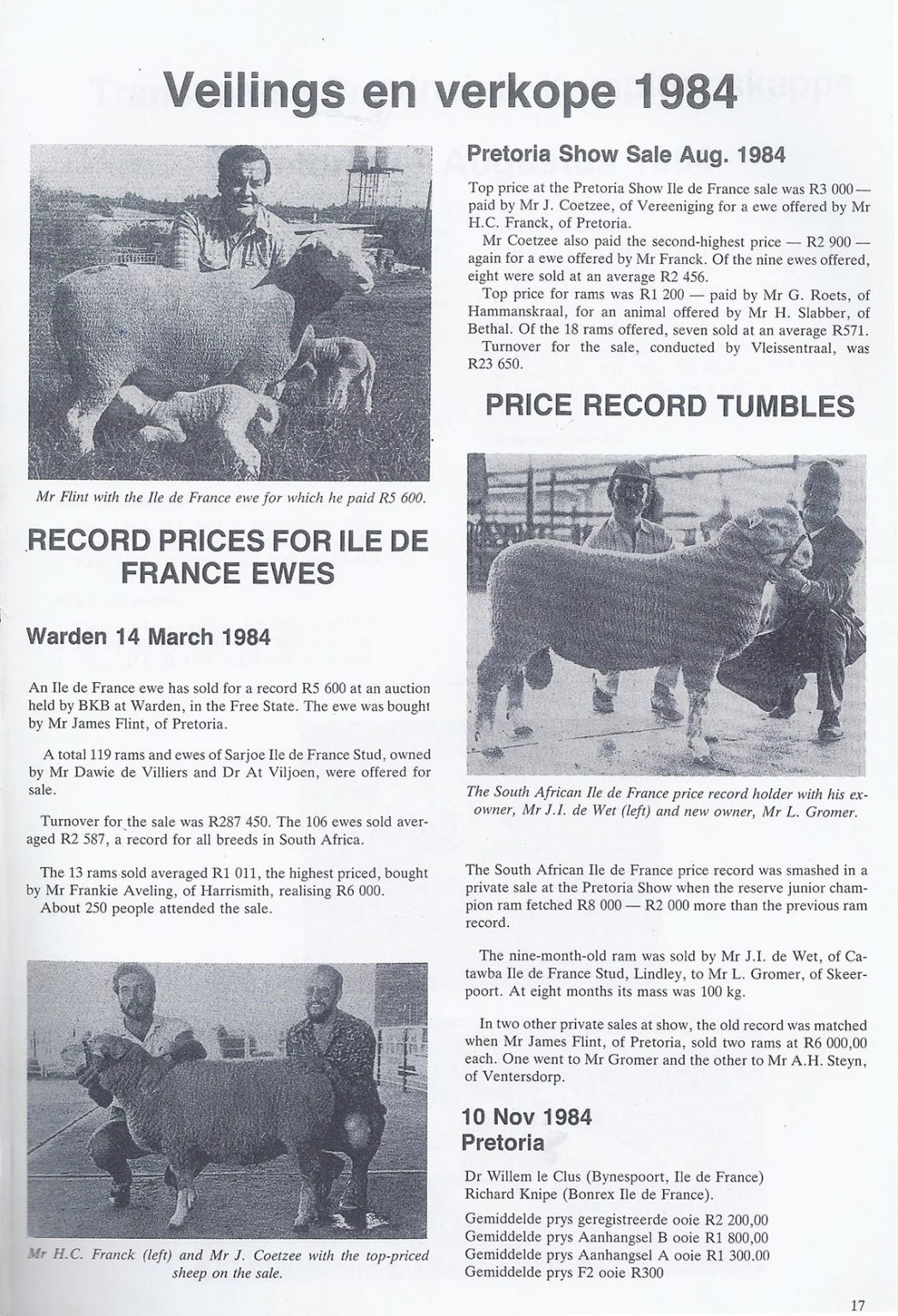
Historic Île de France photo
Timeline

Over 120 Years in South Africa

From a historic first landing at Table Bay to a breed society with members across the country, trace the Île de France's remarkable journey through South African farming history.

France

Origins in the Île-de-France Region

Selective breeding of what would become the Île de France begins in France. Dishley Leicester rams are crossed with Rambouillet ewes to create a large-bodied, fast-growing meat breed with good wool quality. The Île-de-France region's fertile pastures prove ideal for developing this dual-purpose animal.

1822
1903
Arrives in SA

The First Gift Arrives at Table Bay

On 23 March 1903, the first Île de France animals arrive in South Africa — a gracious gift from Madame Arnaud Ginchard of France, whose flock descended from the celebrated breeder Delacour of Gouzangrez. The animals are quarantined at Table Bay. A ram is photographed and featured in the Cape Argus on 29 April 1903, capturing national attention.

Historic farm photo
WWII Era

Wartime Crossbreeding Proves a Success

During the 1930s and 1940s, interest grows in producing quality slaughter lambs. Shortly after the outbreak of the Second World War, Messrs. Frasers Limited imports a number of Île de France rams to their farm at Wepener (Aanvang). When crossed with Merino ewes, the results are outstanding — producing lambs with superior growth rates and carcass quality. This cross becomes a blueprint for commercial lamb production in South Africa.

1939–45
1972
Commercial Revival

Commercial Imports Resume

After a gap of nearly 30 years, commercial importation of Île de France genetics resumes in 1972, driven by private breeders recognising the breed's unmatched commercial value. The renewed interest marks the beginning of a systematic effort to establish the Île de France as a leading meat breed in South Africa.

Official Society

Breeders' Society Established

The Île de France Breeders' Society of South Africa is officially founded in 1980, providing a formal structure for the recording, selection, and improvement of the breed. The Society sets clear objectives focused on efficient meat production, ewe fertility, lamb growth rates, and carcass quality — establishing the standards that define the breed to this day.
1980
Today
Donkerberg Boerdery

Premium Lamb on Donkerberg Farm

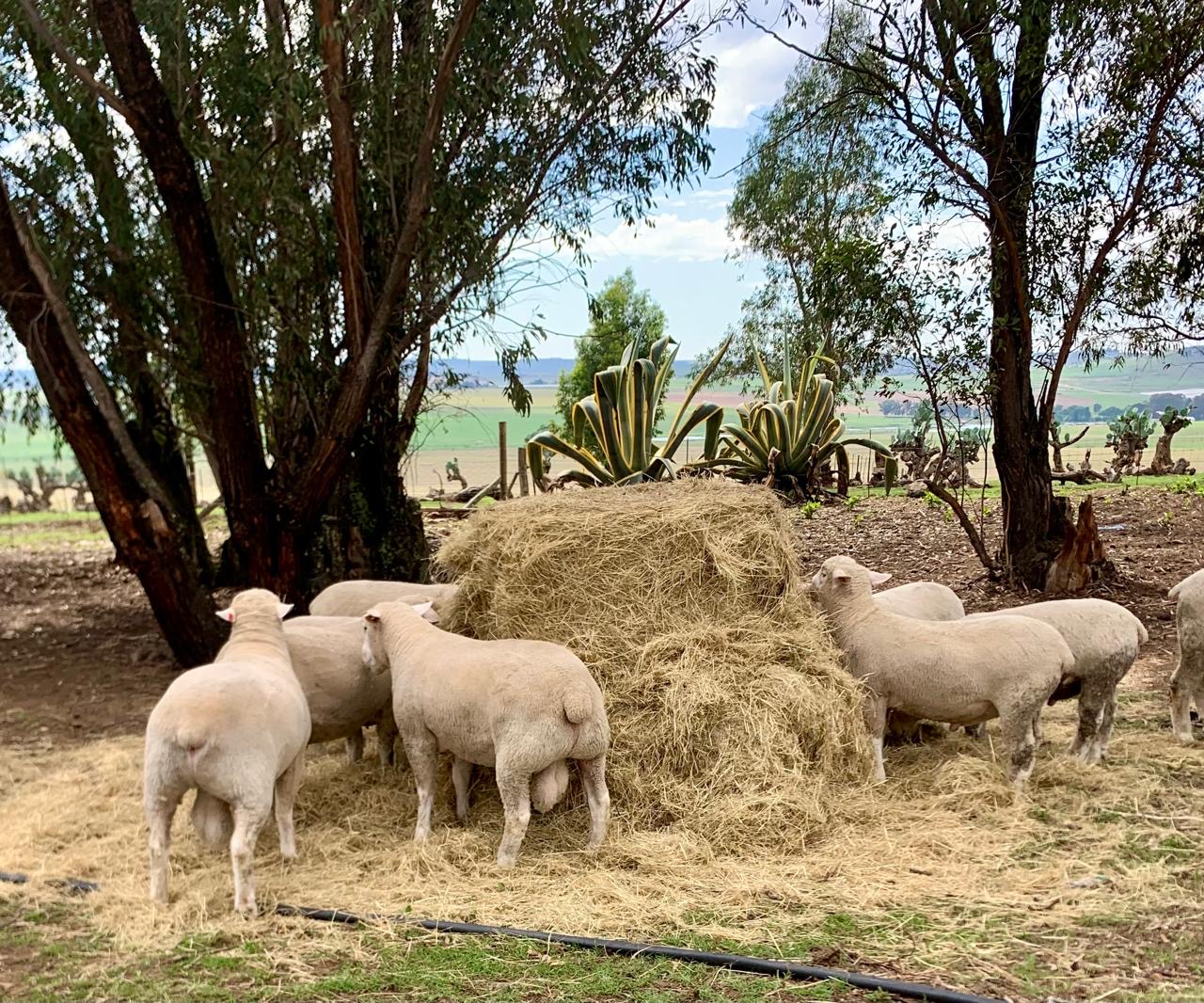
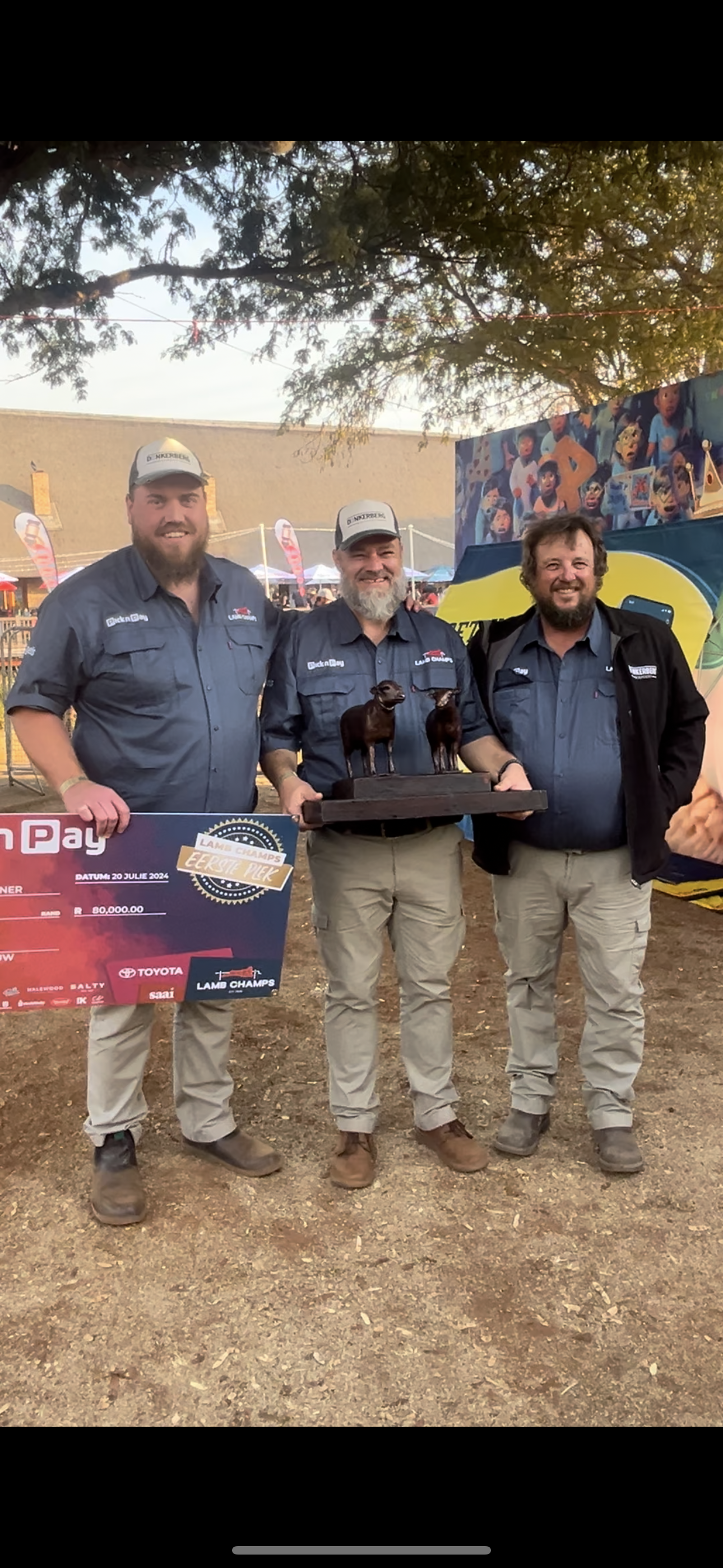
Today, Donkerberg Boerdery proudly carries forward the legacy of the Île de France on the fertile plains of Donkerberg Farm, Reitz, Free State. The breed thrives in over 30 countries worldwide, and on our farm it continues to deliver the premium quality, exceptional growth rates, and outstanding carcass characteristics that have made it one of South Africa's most respected meat breeds.

Donkerberg Boerdery today
Breed Goals

Île de France Breed Objectives

The Île de France Breeders' Society targets efficient meat production within a given environment — measured as maximum return of quality meat per unit of metabolic mass. Every selection decision is guided by these core objectives.

Ewe Fertility & Fecundity

High lambing percentages of 150–170% ensure productive flocks with multiple births. Ewes remain productive until 9–10 years of age, delivering outstanding lifetime value.

Rapid Lamb Growth

Lambs reach market weight in just 100 days, with a birth weight of 3–5 kg growing to 34–41 kg. Exceptional feed conversion translates directly into commercial efficiency.

Premium Carcass Quality

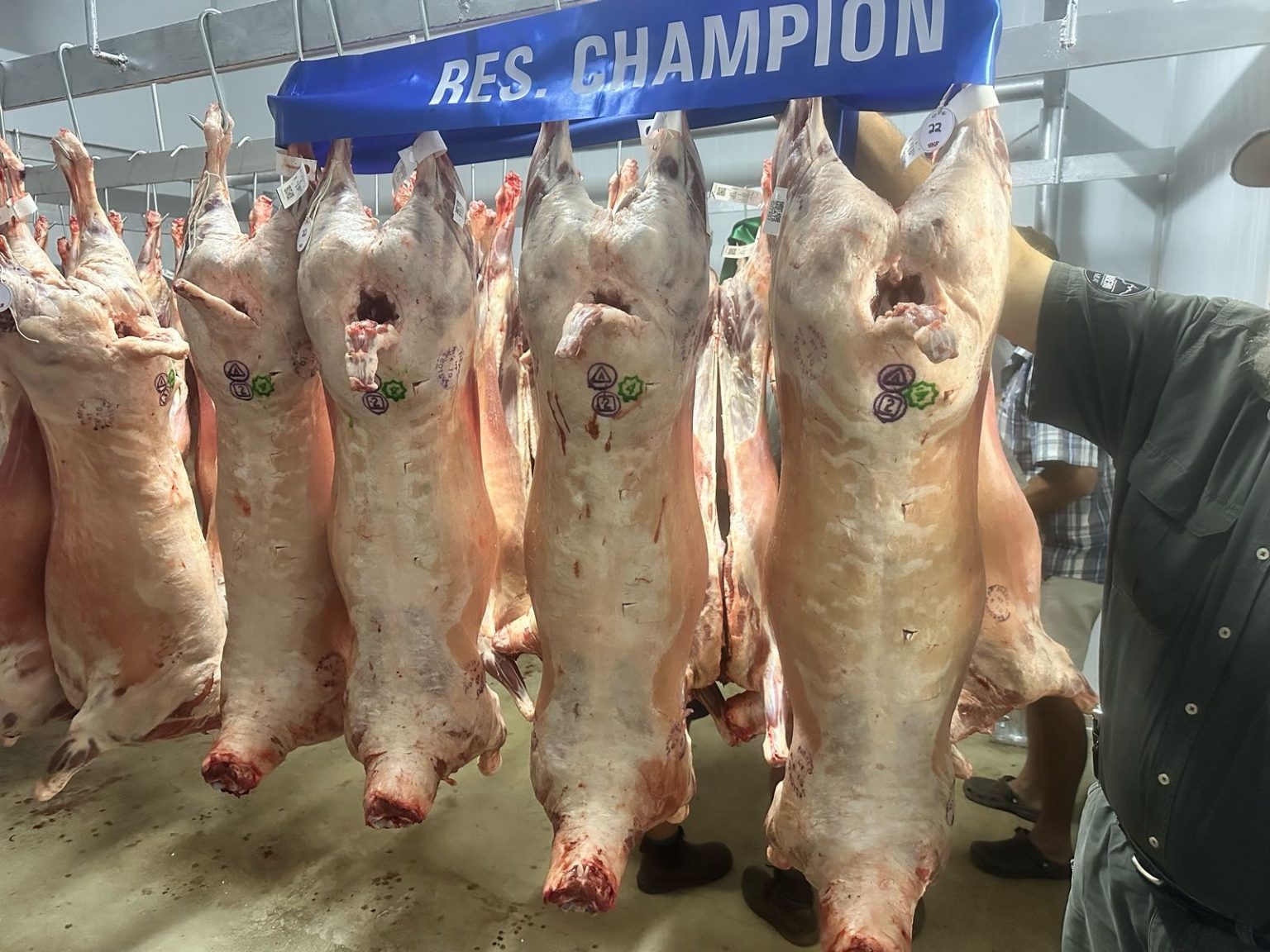
Dressing percentages of up to 66.4% with exceptional muscle development, correct fat cover, and a meat-to-bone ratio that satisfies the most demanding market requirements.

Mothering Ability

Strong maternal instincts ensure good milk production and attentive care of lambs. This directly supports the high 42-day weights of 19–24 kg achieved by Île de France lambs.

Climate Adaptability

The breed thrives in over 30 countries under semi-intensive, intensive, and extensive farming systems. On the Free State highveld, it handles both summer heat and winter cold with ease.

Acceptable Wool Production

Ewe fleeces yield 3–4.5 kg of clean white wool with a fibre diameter of 23–27 micrometers. Ram fleeces yield 5–6 kg — providing a secondary income stream alongside premium meat.

Continue Exploring